





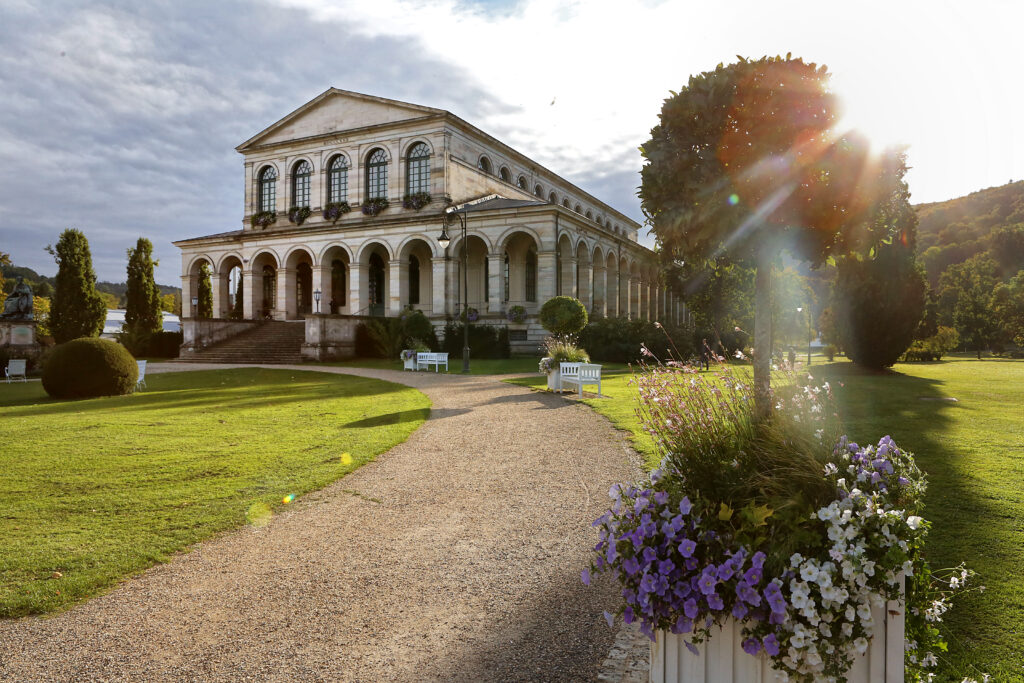
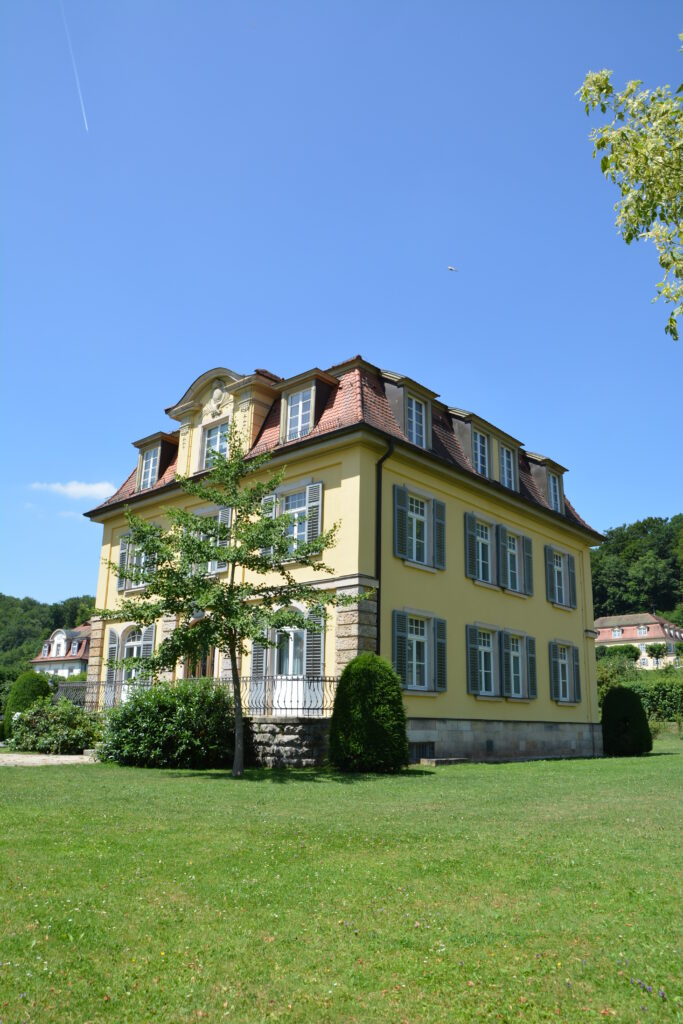
In 1747, due to the excellence of the springs, the prince-bishops of Fulda began building the unique seaside resort, the design of which was completed in 1780. The Italian court architect of the Prince Abbots of Fulda, Andrea Gallasini, designed the park’s main features. To this day, the special appeal of the palace park is the unity of its historic and well-preserved building ensemble as well as the baroque structure of the representative central garden.
Flower garden / Changing Flowers
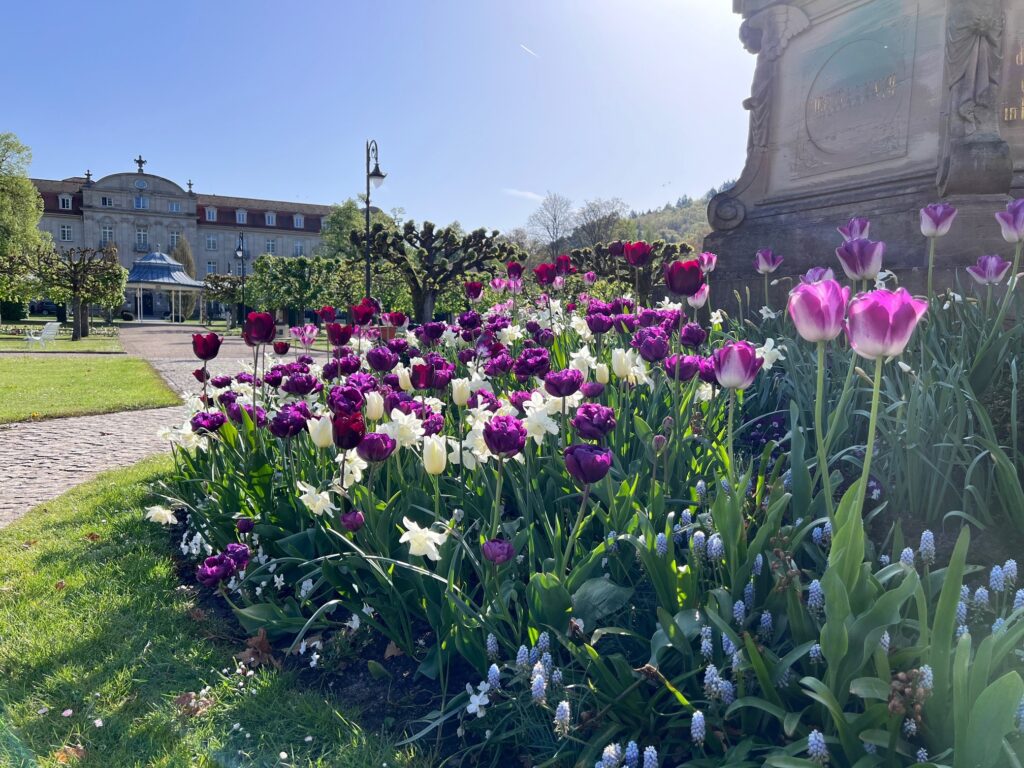
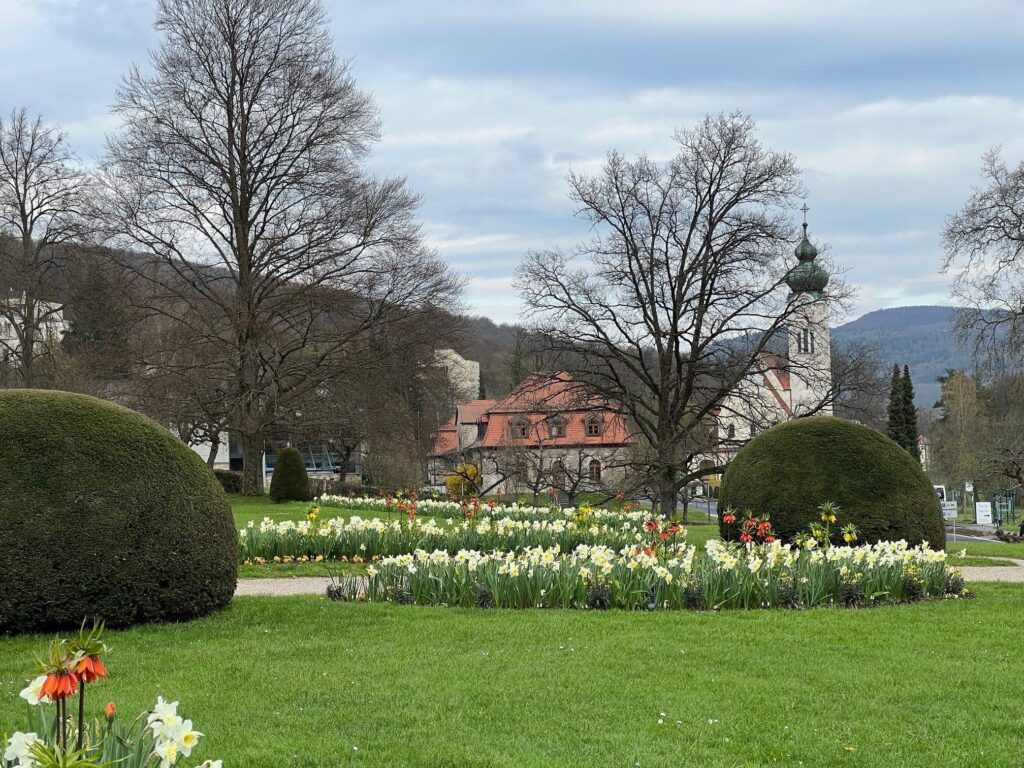
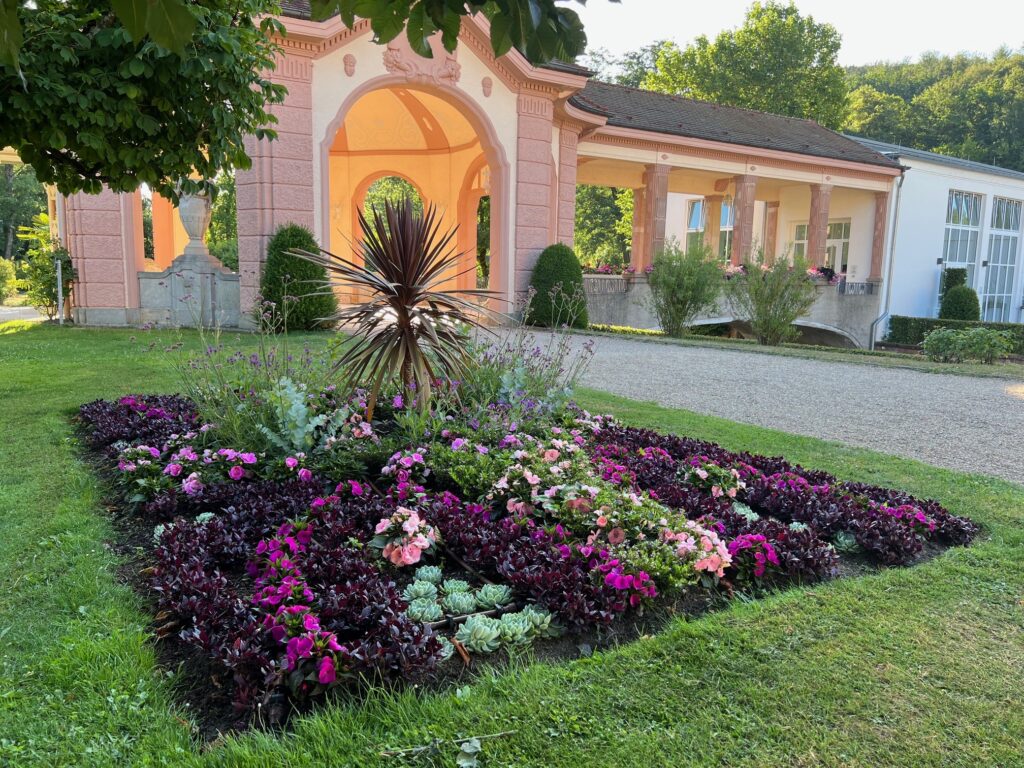
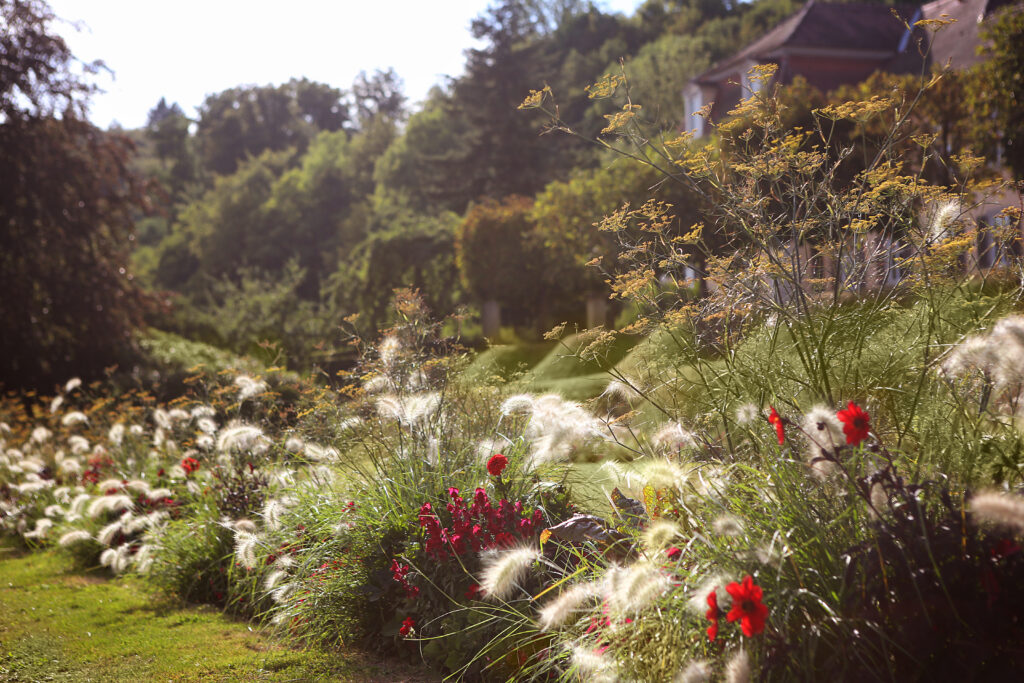
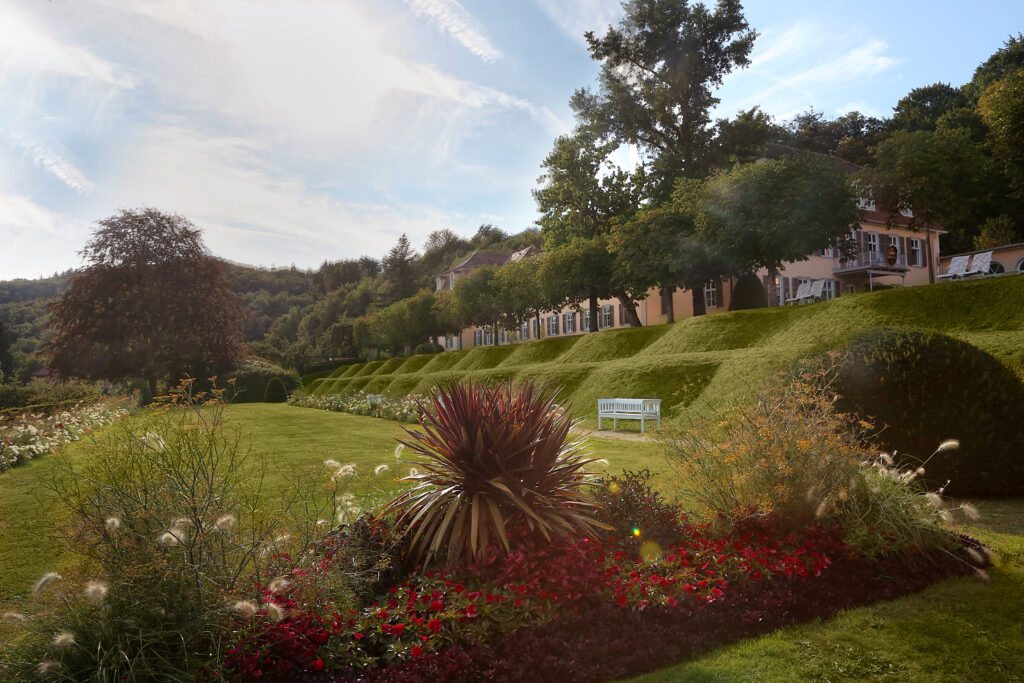
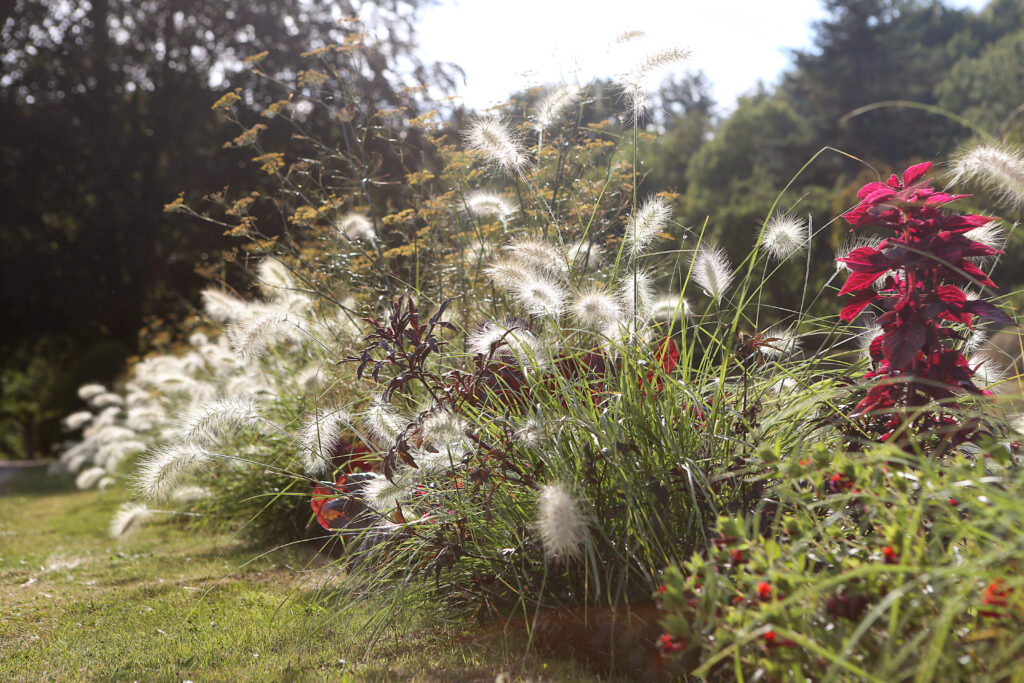
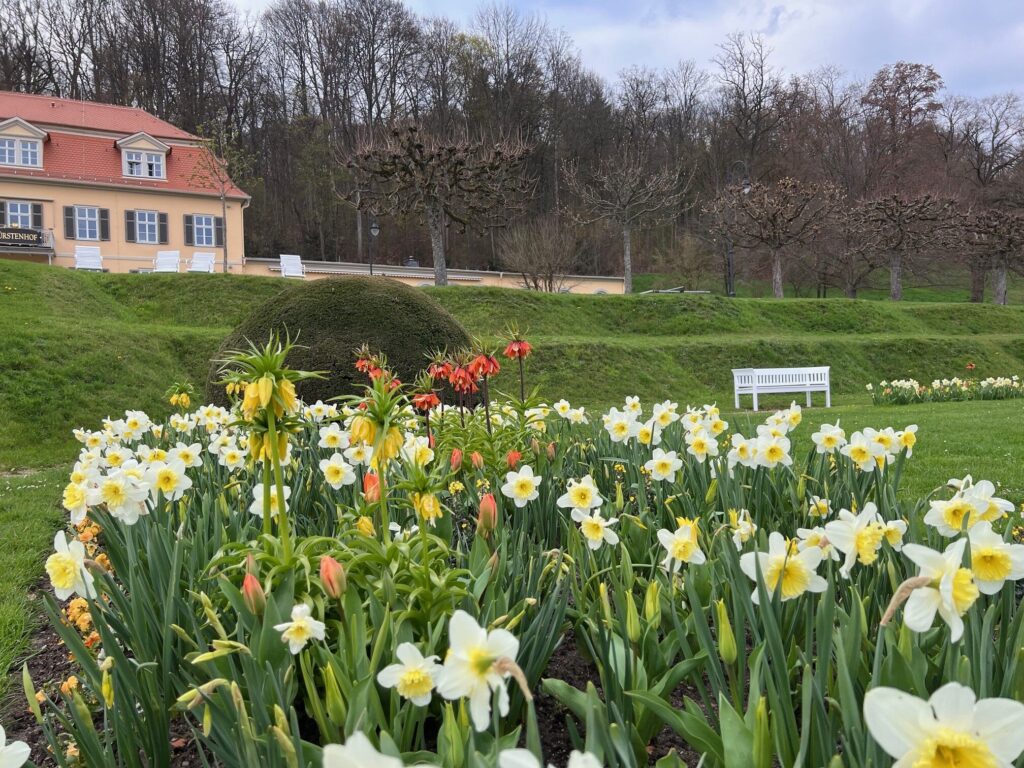
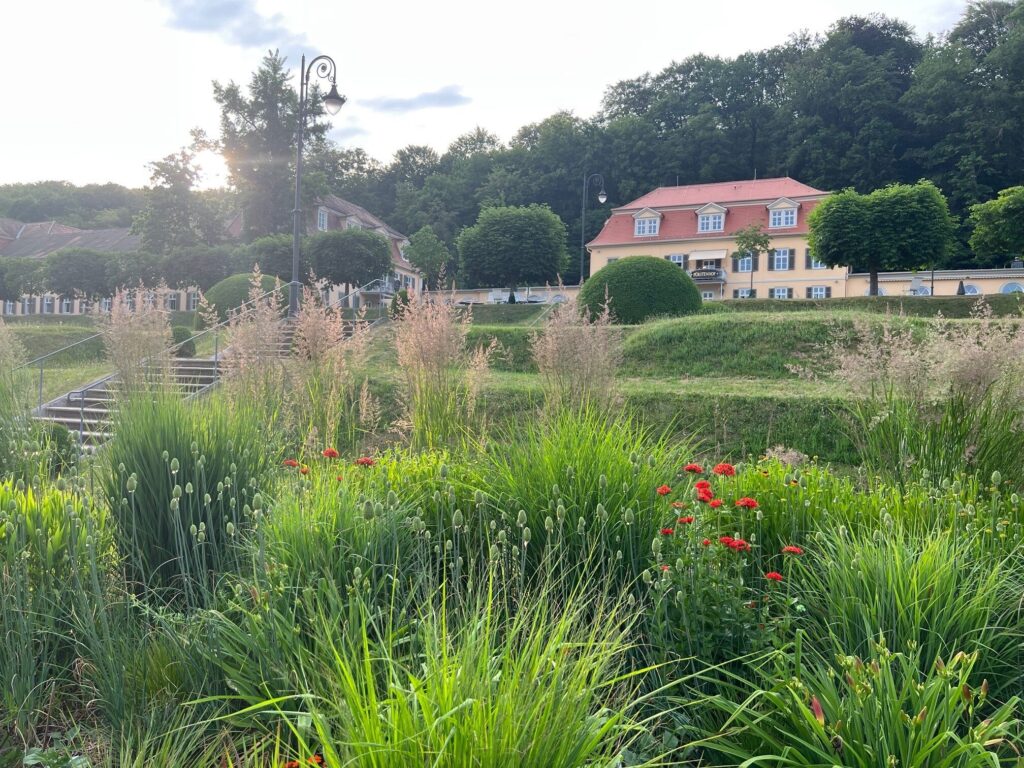
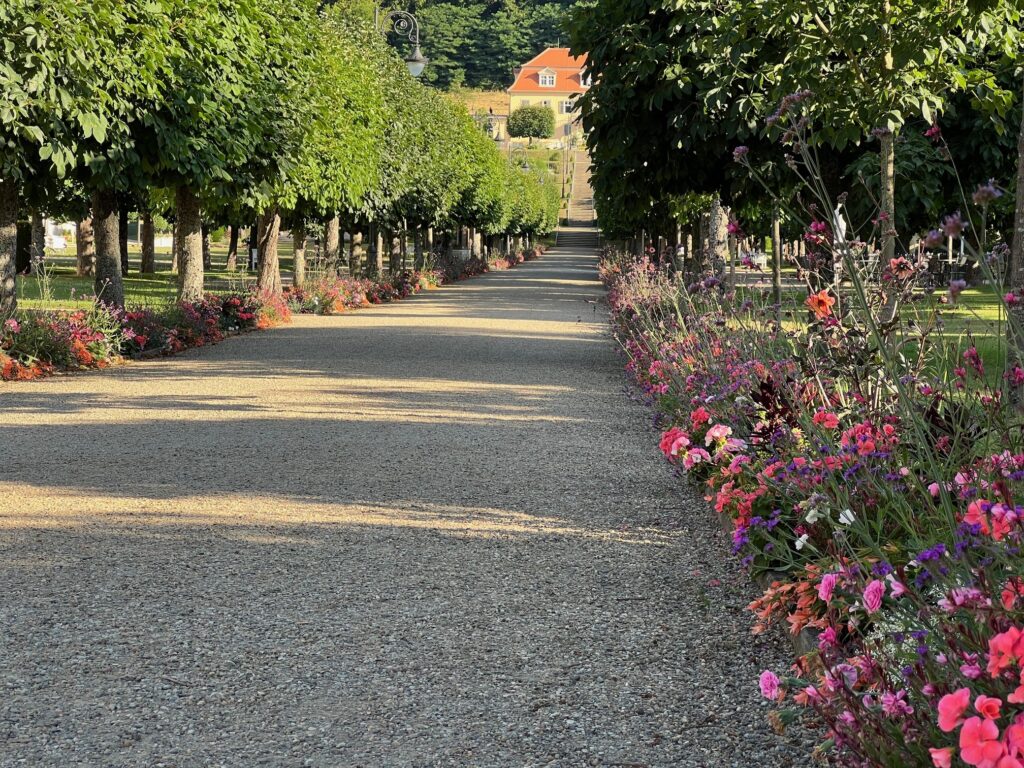
All the changing flower beds are located in the heart of the castle park, which covers approximately 7 hectares. Over 600 square meters of flower beds are replanted twice a year with color-coordinated flower arrangements. Depending on the effect, a distinction is made between lushly planted flower arrangements and the more austere structural beds. While the blooming and harmonious summer flower arrangements appear innovative, free and therefore more modern, the structured beds are subordinate to a strict pattern. Therefore, structured beds use a few plant species, which are then planted over a large area according to a pattern and progression. In May, up to 15,000 plants in 80 different species and varieties are planted on the beds, including boxes and pots. In October there are 11,000 plants in 20 different species and varieties. What is special is the high proportion of flower bulbs, which are also planted in all flower beds in October. There are up to 24,000 flower bulbs in 30 different types and varieties. The flower beds are divided thematically so that they harmonize with each other in terms of color. For example, cool colors are used for the beds in the lower palace park and tones of warm color families are used for the beds on the Fürstenhof terraces.
Fürstenhof terrace and Central Axis
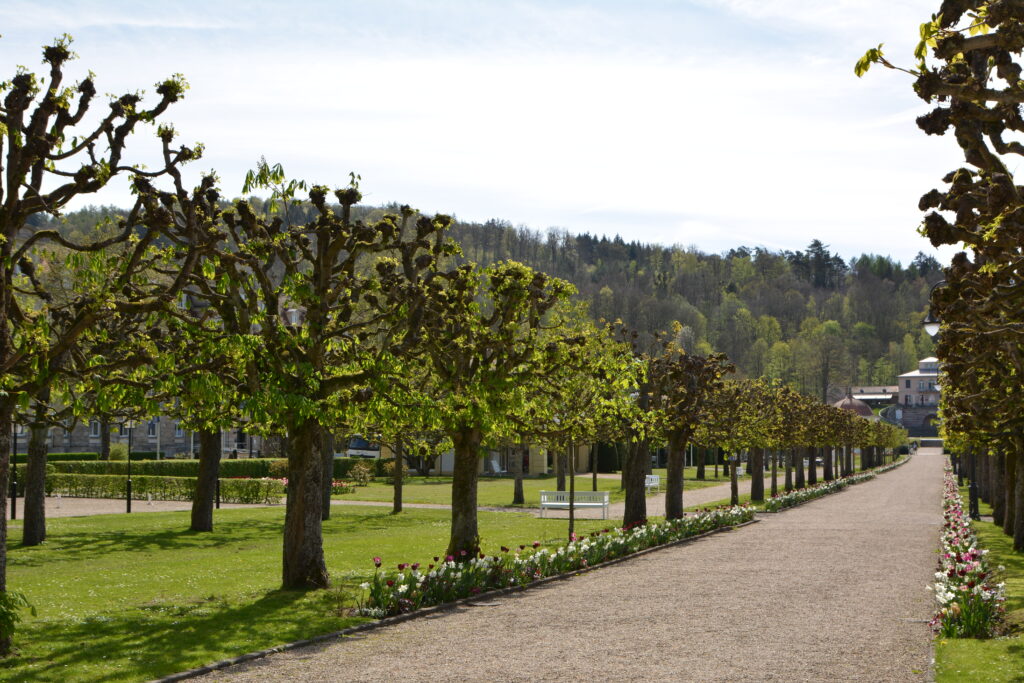
One of the oldest and most beautiful design elements in the castle park is undoubtedly the terraced area below the Fürstenhof and the central axis running towards Sinn, which consists of box-shaped chestnut trees in the form of a double-row avenue. In 1747, the prince-bishops of Fulda began building the unique seaside resort. The Italian court architect of the Prince Abbots of Fulda, Andreas Gallasini, was commissioned for this. The design was completed in 1780 and the terraces and the main axis are still part of the baroque core area of the historical complex. Even today, the terraces below the Fürstenhof are planted with seasonally changing flower arrangements and the flower beds, which are over 30 m long and 100 m² in size, show their splendor from March to October. The central axis, which is over 300 m long, is also replanted twice a year. The flowers accompanies visitors along the central axis.

Topiaries
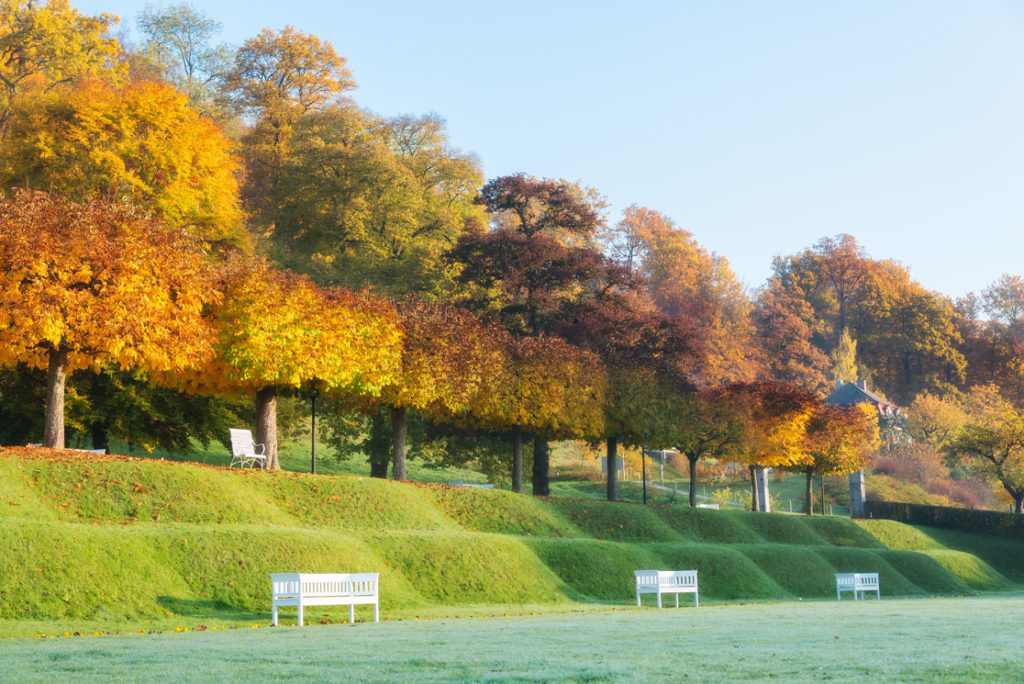
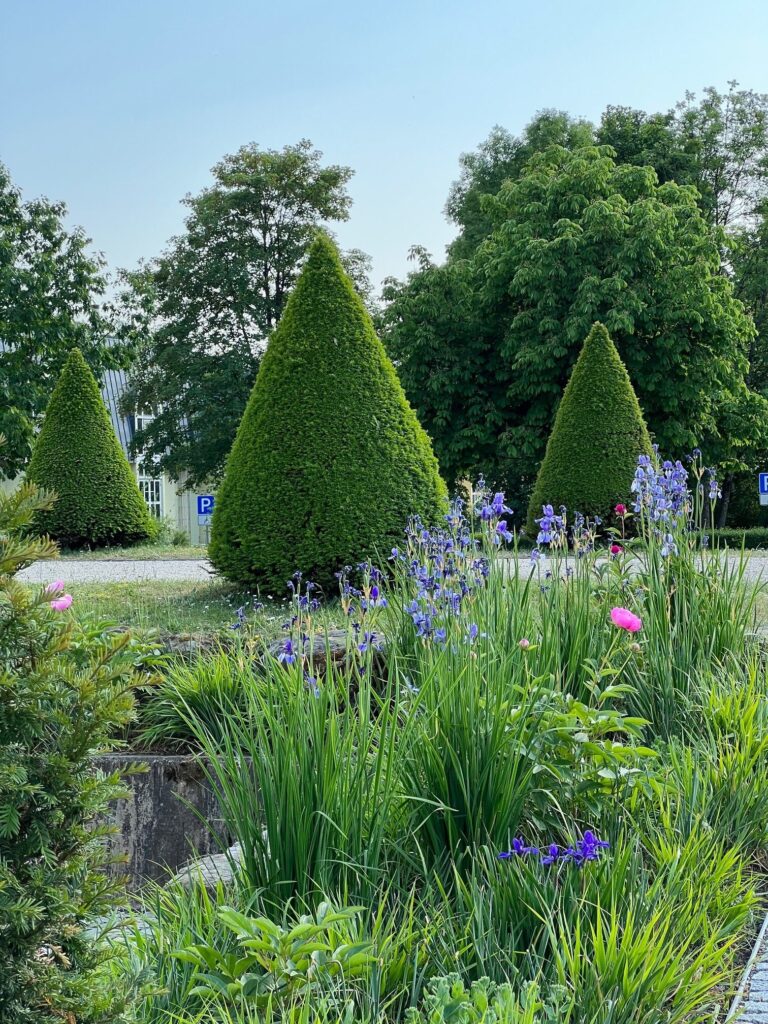
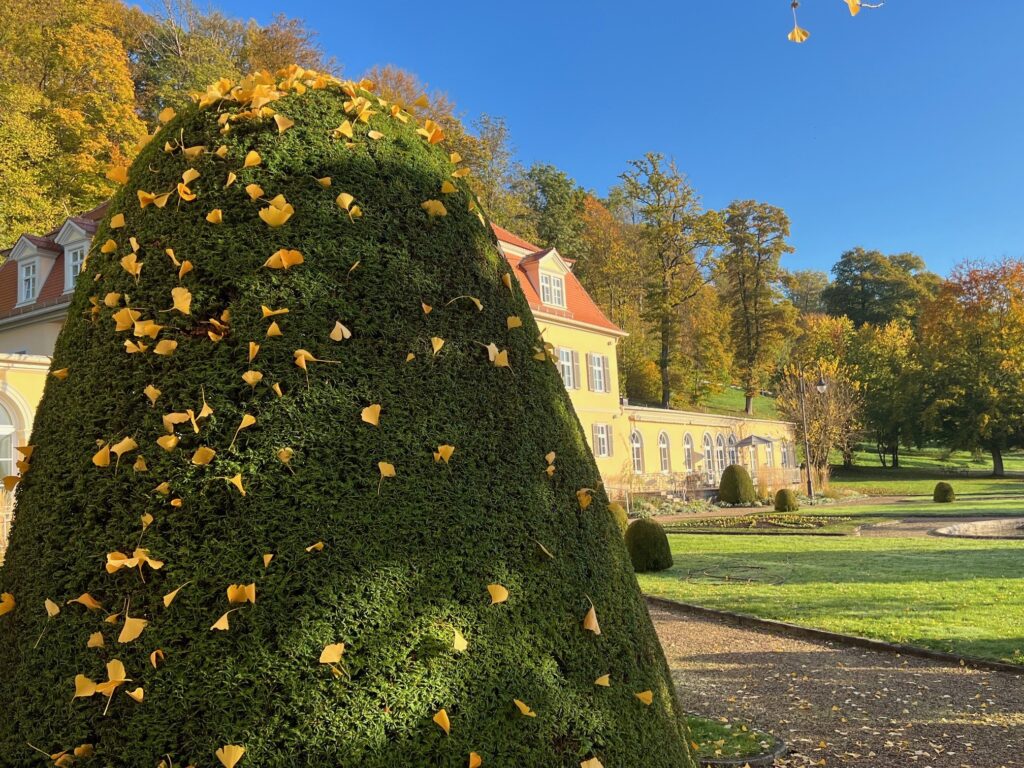
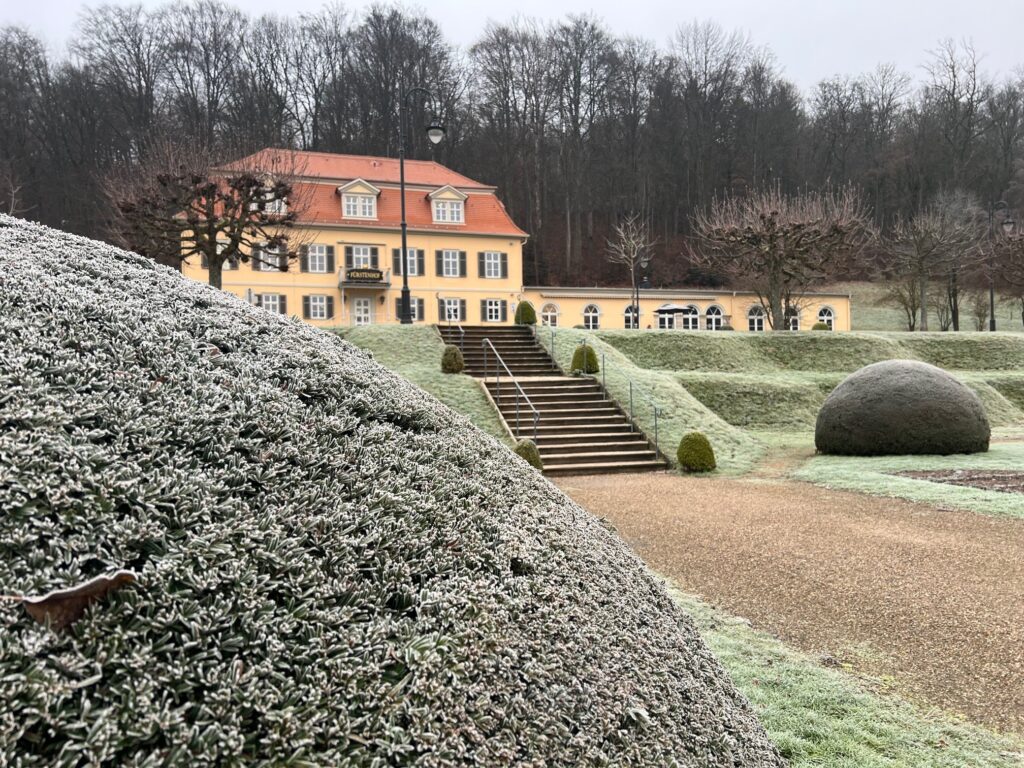
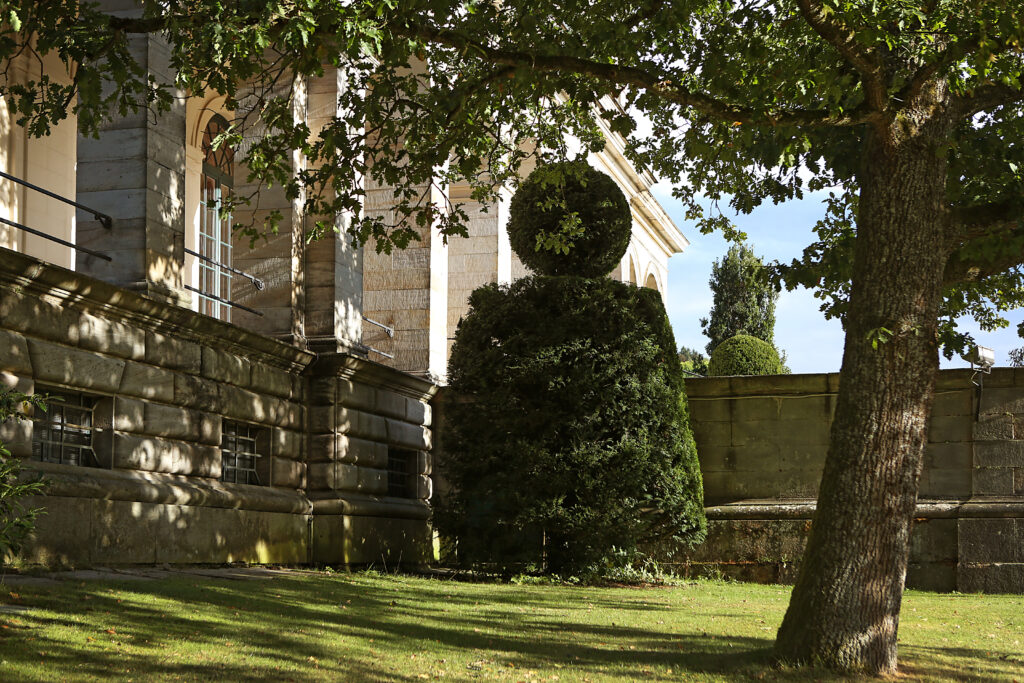
Trees shaped by pruning largely determine the image of the castle park. First of all, there are the many box-shaped chestnuts and linden trees in the middle of the park, as well as the arcade made of linden trees below the Fürstenhof and the many hornbeam hedges. While we prune our lime trees, yews and boxwoods annually, the chestnuts are only trimmed every two years. Over 250 yew and box trees determine the baroque appearance of the castle park and are particularly noticeable in the winter months. The evergreen trees give the castle park structure and form green visual axes even in winter. No matter what shape they take, be it a beehive, a cone or a ball, the evergreen sculptures look particularly graceful and bizarre covered in hoarfrost. Due to their symmetrical and well-considered arrangement, the accurately cut yew trees always seem like the green guardians of the castle park and run through the complex like a “green thread”.
Special Woods in the Castle Park
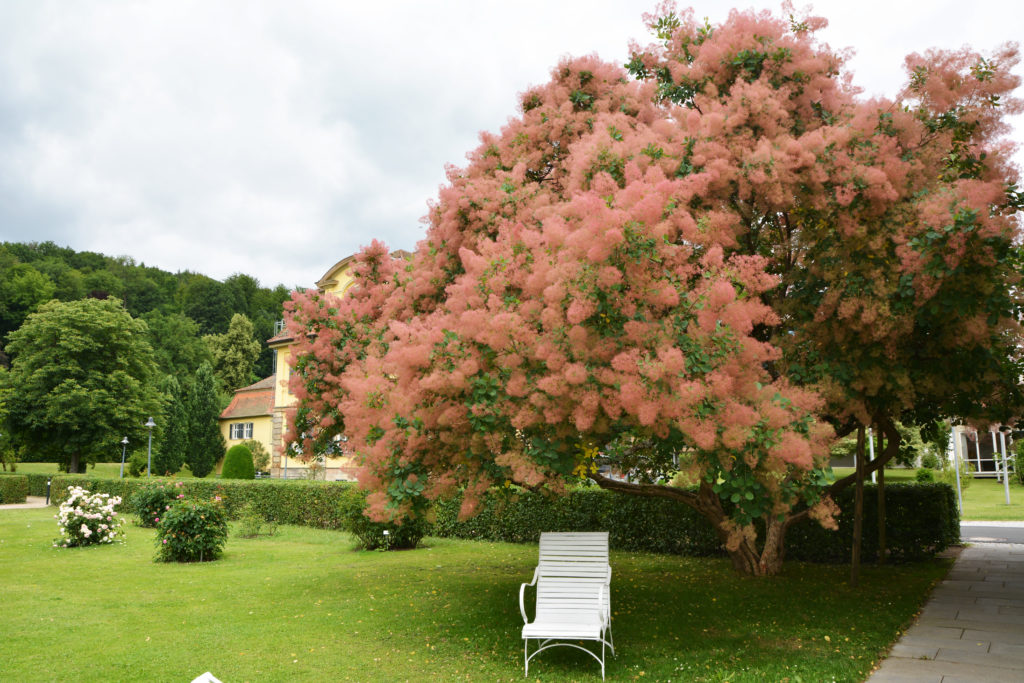
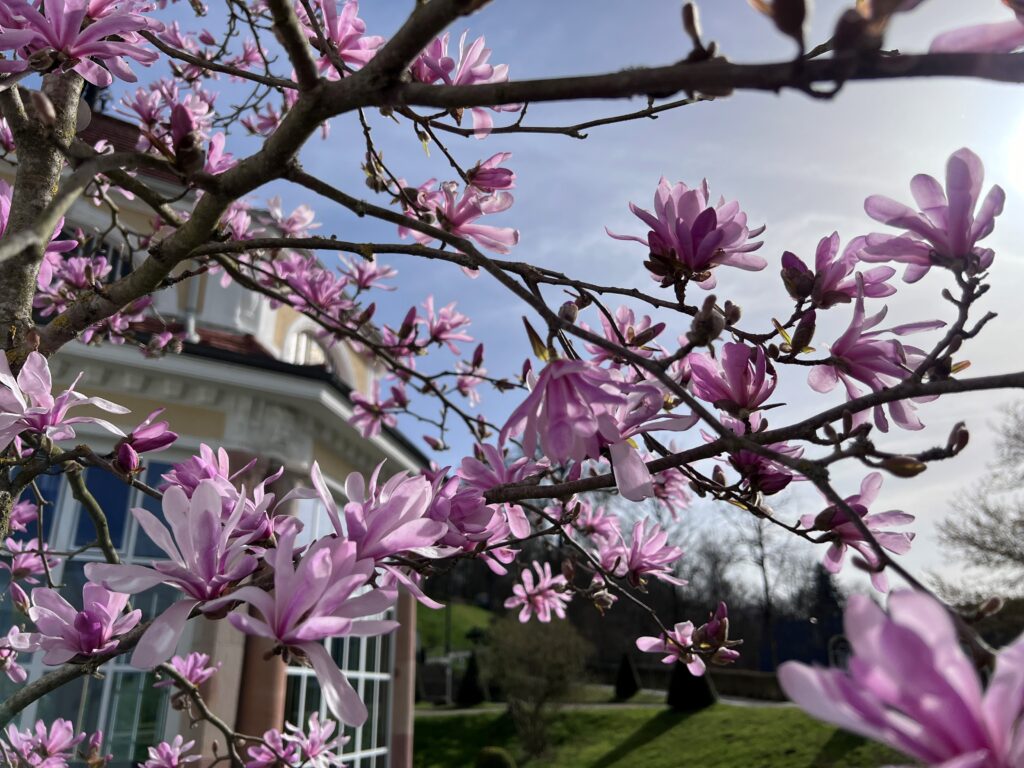
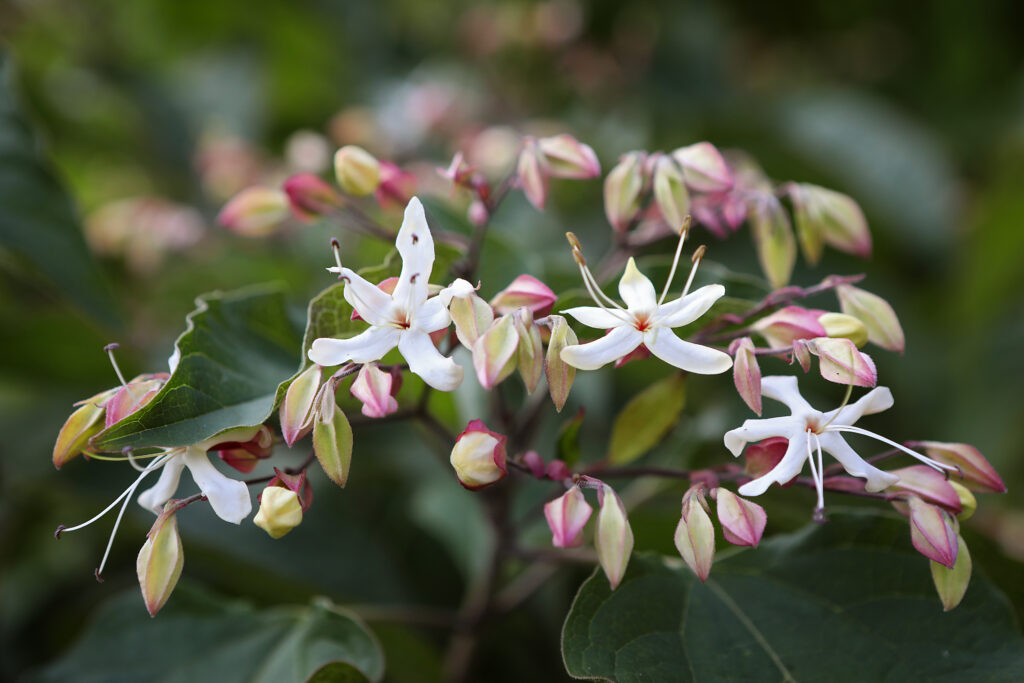
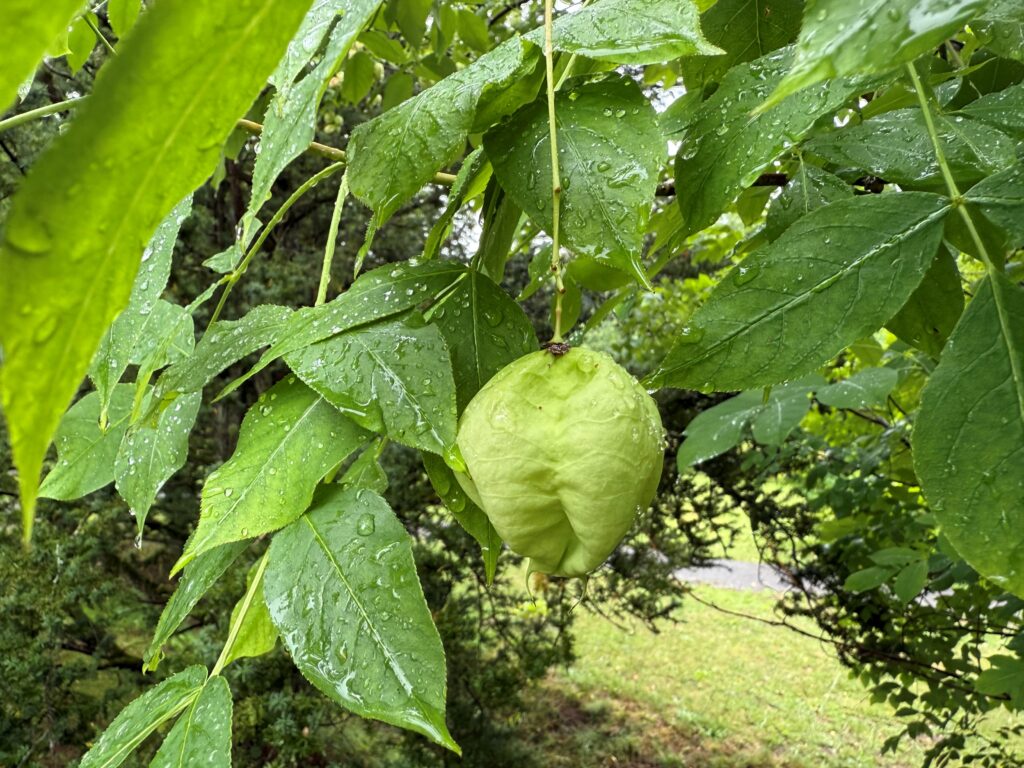
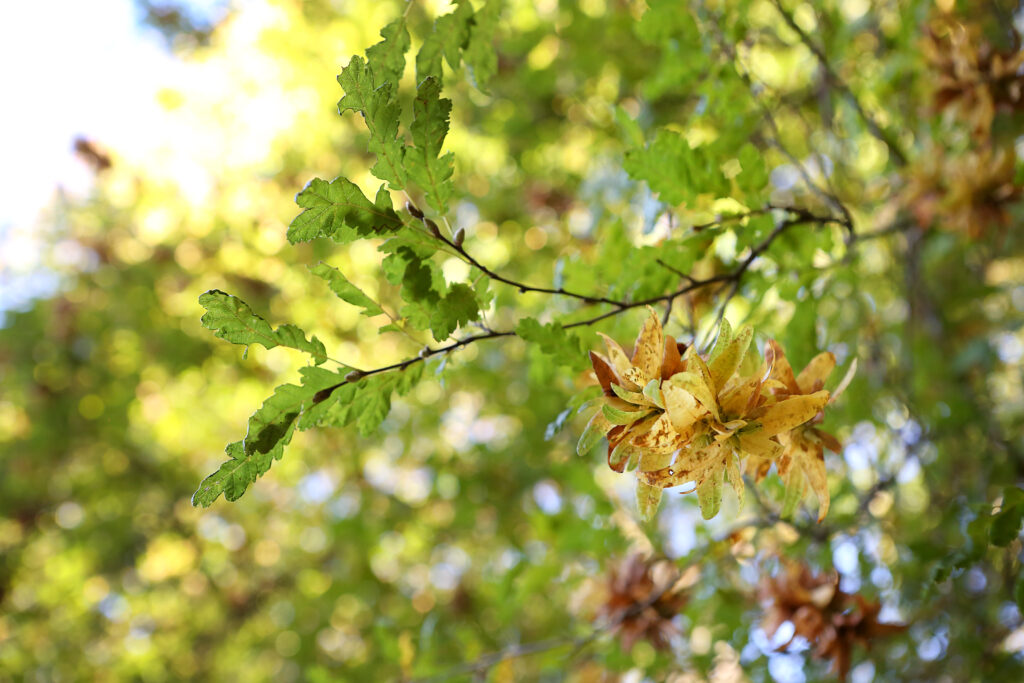
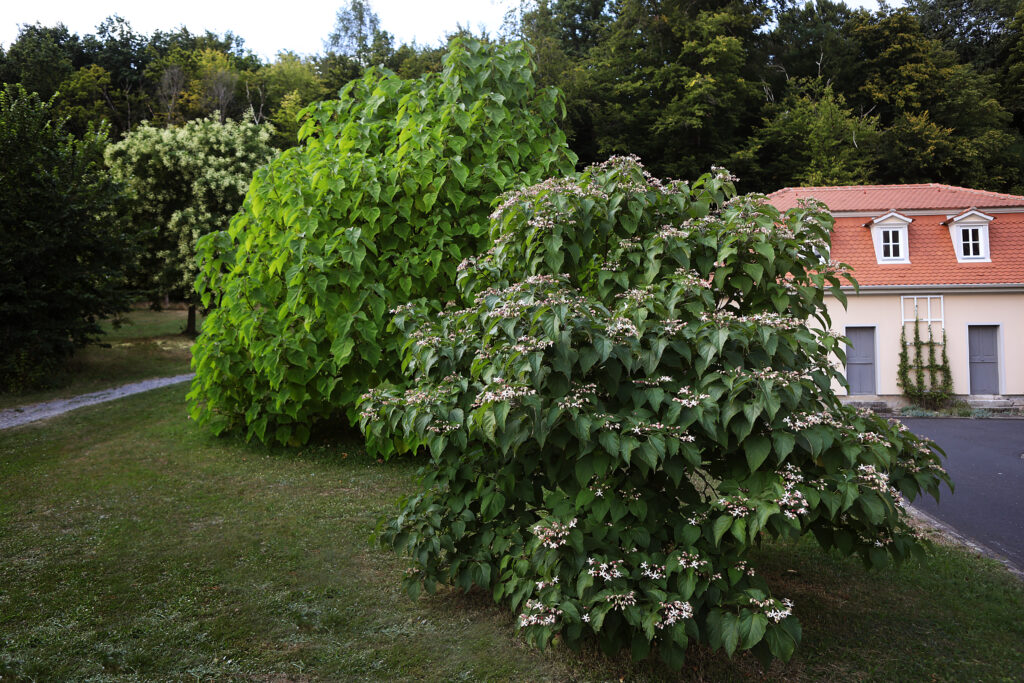
A place of many rarities, as there are more than a few dozen special trees and shrubs on the 40 hectare site. Even back then, great value was placed on the diversity of special trees. Again and again you discover botanical peculiarities, such as a cucumber magnolia up to 30 m high, which grows right next to an equally tall and indestructible ginkgo tree. But also the handkerchief and bluebell trees from China, which are all located in the extensive castle park. Other botanical peculiarities include smaller trees such as the wig bush or the copper rock pear, which, despite or perhaps because of their discreet size, make great appearances almost all year round. From June to July, the large and very delicate inflorescences cover the wig bush, which is up to 5 m high, and shine like pink cotton candy in the backlight. The medium-sized shrub probably makes its biggest appearance in the castle park when the leaves turn orange-red in autumn and the autumn sun makes the leaves glow. The copper rock pear enchants from spring to autumn. The species, which comes from North America, begins to bloom in April. The 4 to 6 m high, umbrella-shaped bushes stand in the castle park like bright white clouds of flowers. From mid-June onwards, the rock pear, also known as the raisin tree, offers something to snack on because the pea-sized fruits taste pleasantly sweet. The taste is a combination of blueberry and pear. However, you have to hurry when harvesting, because the songbirds in the castle park also know what is delicious. Their bright and picturesque growth is particularly impressive in autumn, when the foliage turns bright yellow to orange-red. An original and extremely remarkable phenomenon is an old and large specimen of a hornbeam mutation, popularly known as the “miracle tree”. This tree develops two different leaf shapes on just one branch. On the one hand, the typically jagged edges and indentations of an oak leaf and, on the other hand, the characteristic of a hornbeam leaf with a sawn leaf edge. Hence the name “oak-leaved hornbeam”.
Roses
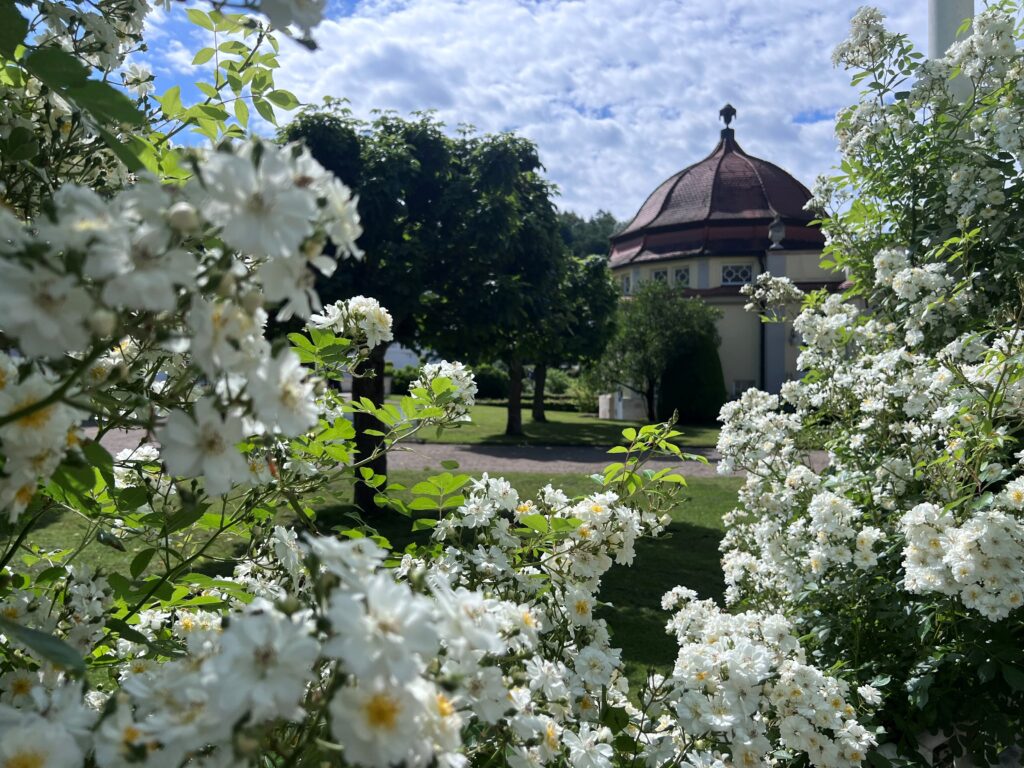
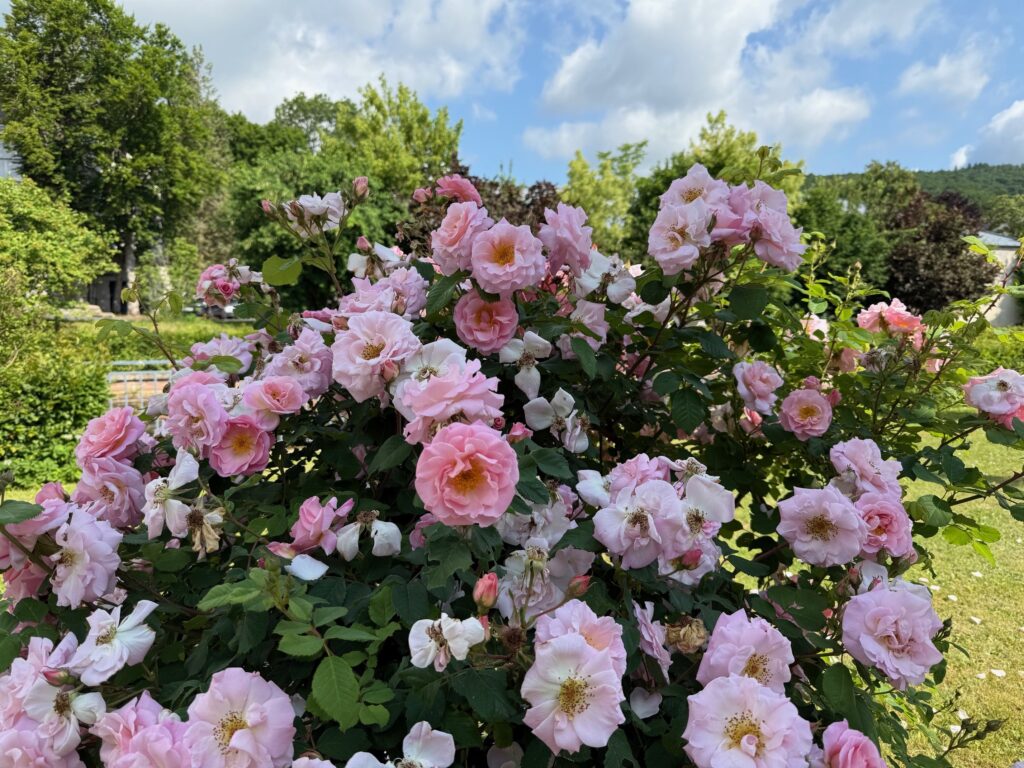
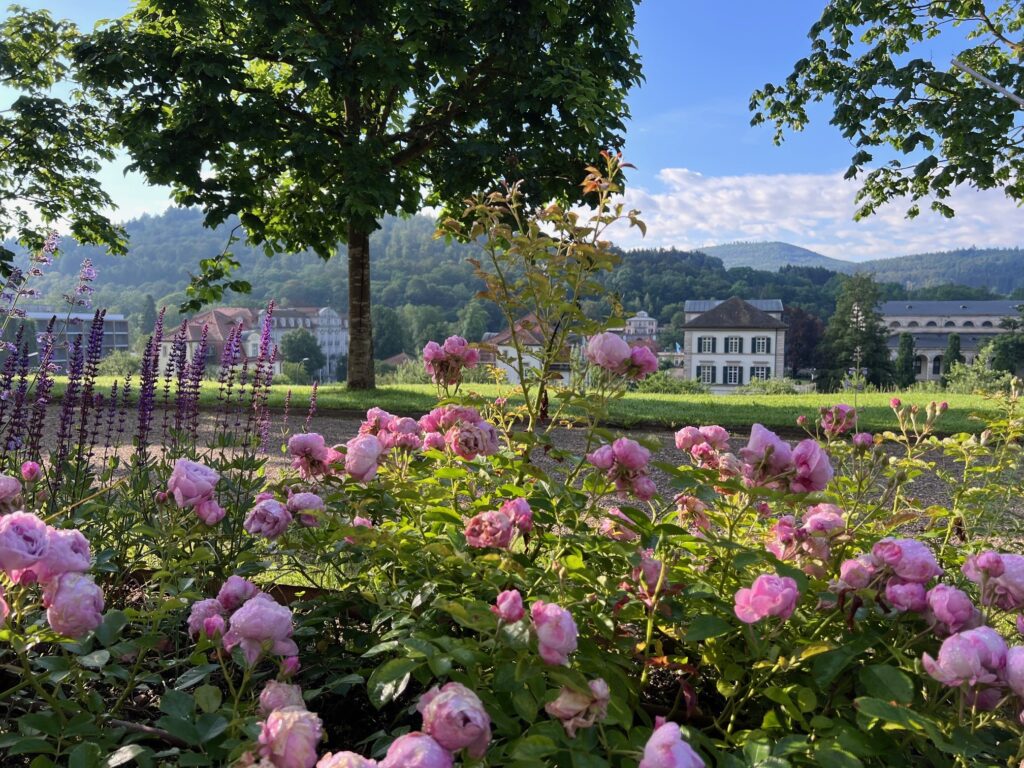
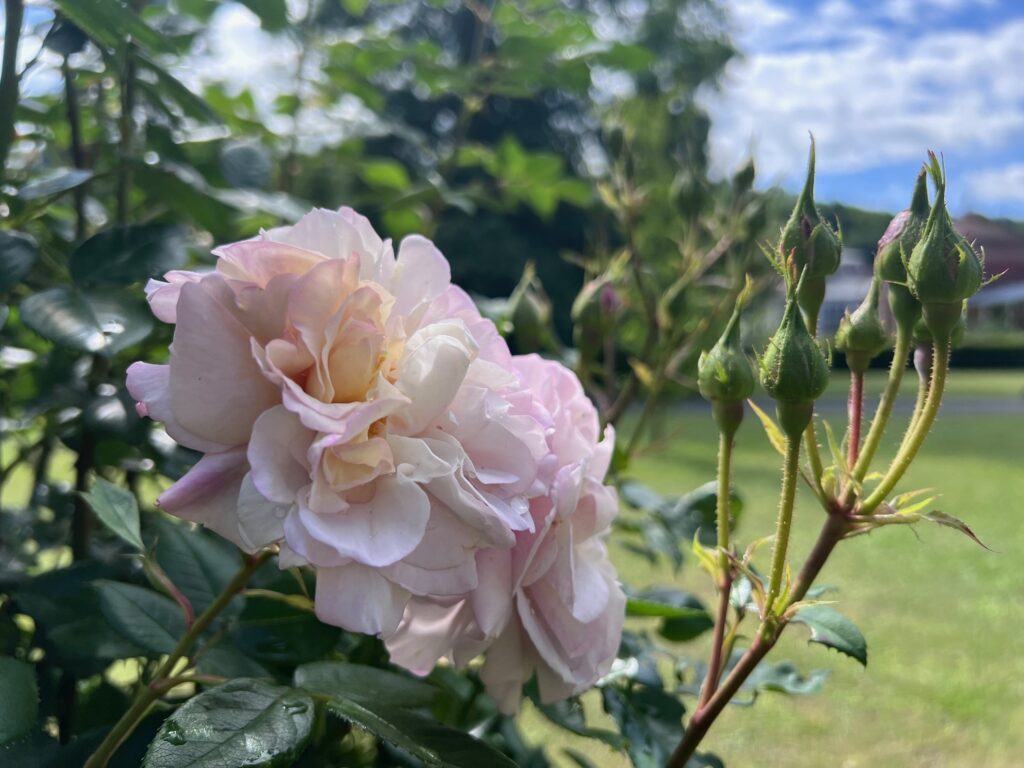
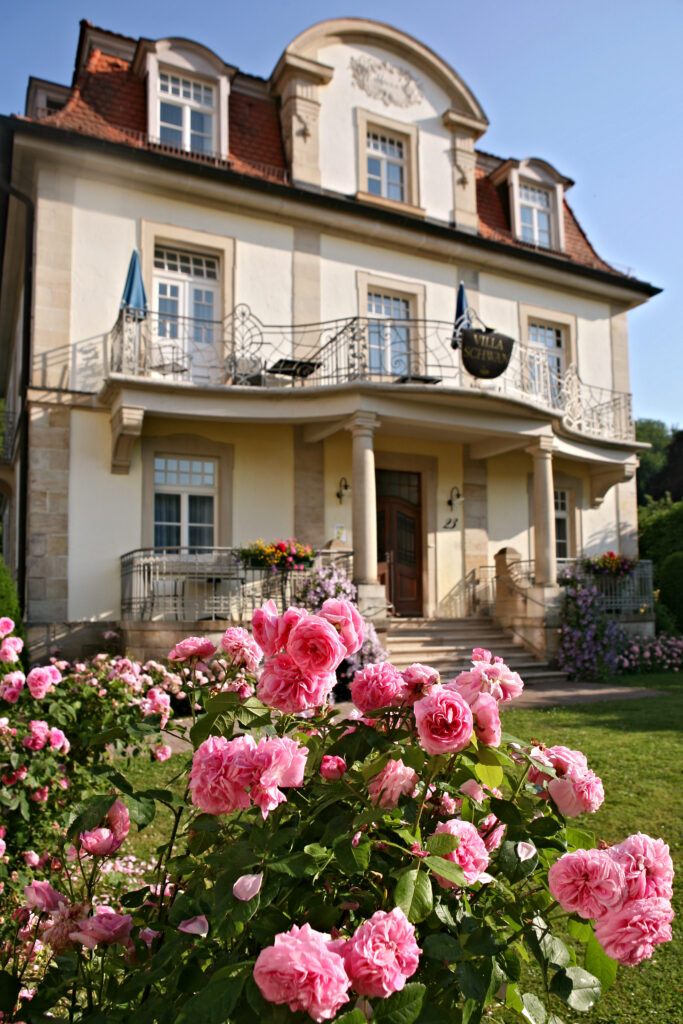
In June there is a wonderful smell of roses in the castle park, as more and more buds open every day in the castle park, along the Sinnpromenade, in the walkway and in front of the terrace at the Parkhotel. Already in the 19th century it was unthinkable that the castle park could do without roses. Even today there are over 500 m² planted with the queen of flowers. The grounds of the Staatsbad have everything from ground cover and floribunda roses, English roses, shrub and wild roses to climbing roses. The appropriate species and varieties were selected for almost every location. The selection of varieties is based on the general color design concept, robustness, health and suitable growth behavior. If possible, ADR roses are used. The abbreviation stands for the “General German Rose Novelty Test”, is a working group and consists of representatives of the Association of German Nurseries. Roses that carry the ADR designation have previously undergone rigorous testing to assess the garden value of new roses. The special thing about it is that, among other things, resistance to leaf diseases such as powdery mildew, rust and sooty mold was tested and we can therefore do without chemical-synthetic pesticides. The avoidance of chemical-synthetic pesticides is one of our basic principles and applies to all areas of park maintenance. In this way, we sustainably protect our environment and adhere to the strict requirements of the protection orders for the entire mineral spring protection area. The Head Gardener’s favorite roses and where to find them:
– Bed rose ‘Nautica‘ flowers: double, delicate purple. In the rose bed in front of the princely court.
– Shrub rose ‘Hercules‘ flower: double, pure white-soft lavender. In the bed in front of the Parkhotel terrace.
– English shrub rose ‘A Shropshire Lad‘ Flowers: peach pink, double flowers. Left next to Villa Schwan.
– English rose ‘Gertrude Jekyll‘ flowers: deep pink with light edges, double. 2 pieces in front of the Elisabethenhof
– Climbing rose ‘Violette Parfumee Climbing‘ Flowers: Strongly scented, violet. To the left and right of the entrance pavilion, walkway.
– Rambler rose ‘Guirlande d Àmour‘ flower: Remontant rambler rose with white double flowers. Strongly scented.
Do you have questions and are you planning a visit with us?
We would be happy to provide you with more detailed information. Don't hesitate to contact us.